


Moving to Another State? Consider These Tax Moves

Relocating to a new state can be exciting. You may have decided that you needed a warmer climate, lower housing costs, closer proximity to family, or better job opportunities.
But moving to a new state may have tax consequences that can follow you long after you settle in. Evaluating these issues may help you plan your move and limit filing complications, prevent residency issues, and identify possible tax savings.
How will your income be taxed?
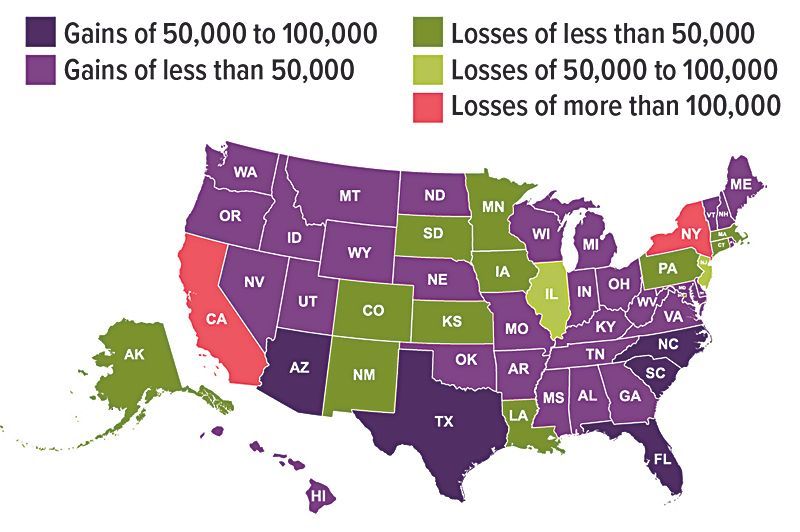
States vary in how they tax income. Twenty-six states and the District of Columbia implement a progressive income tax (tax increases as income increases), while fifteen apply a single tax rate to taxable income and nine impose no state income tax.1 For some, the opportunity to pay no state income tax may be the primary driver to move to Alaska, Florida, Nevada, New Hampshire, South Dakota, Tennessee, Texas, Washington,* or Wyoming, where there is no income tax; however, states without an income tax may rely more heavily on sales tax, property tax, or other taxes to generate revenue. Understanding how your new state taxes income may help you avert any unexpected tax issues.
Is your move temporary or permanent?
When moving to another state, the distinction between residency and domicile may determine whether your income is taxed in one or both states. Although you can have more than one residence, you can only have one domicile. Your domicile refers to the state that you consider your permanent home and the place you intend to remain indefinitely. Typically, states determine your domicile by evaluating several factors, including where you own property, the number of days spent in the state, and the location of your financial and family ties. Buying a home in a no-tax or low-tax state may be insufficient to potentially eliminate income tax liability in your former state if you still maintain strong connections to your former state.
Are you working remotely?
If you are one of the millions of Americans who work remotely, you may live in one state while your employer is located in another. In this situation, you may be required to file tax returns in both states. You might also be subject to double taxation; some states apply a "convenience of the employer" rule that may allow the state where your employer is located to tax your income as if you were working in the state. Fortunately, several states provide a credit for taxes paid to another state, which can offer some relief against double taxation.
How will retirement and investment income be taxed?
States also differ on how they treat retirement income, interest, dividends, and capital gains. Some states impose a tax on retirement income, while others may provide exemptions or even exclude some retirement income from taxation. Strategically timing when you complete a large stock sale, convert an IRA, or take a withdrawal from your retirement account may help reduce your tax liability.
Will you need to file a part-year return?
If you move to another state during the year, you may have to file a part-year resident state tax return in your old state and a part-year resident state tax return in your new state. States will tax you on the income you earn while living in the state, but you may still be subject to tax in your old state. For example, if you lived in California from January to June and moved to Arizona in July, you would have to file a California state income tax return and pay taxes on the income earned while living in California. You would also have to file an Arizona state income tax return and pay taxes on any income earned in Arizona. (You would typically only have to file one federal income tax return to capture income earned in both states.)
Consider consulting with a tax professional on these complex multistate tax issues before taking any specific action.
(1) Tax Foundation, January 2026
*Washington state does not have an individual income tax but will impose a 9.9% tax on income of those who earn more than $1 million a year beginning January 1, 2028.
All Securities Through Money Concepts Capital Corp., Member FINRA / SIPC
11440 North Jog Road, Palm Beach Gardens, FL 33418 Phone: 561.472.2000
Copyright 2010 Money Concepts International Inc.
Investments are not FDIC or NCUA Insured
May Lose Value - No Bank or Credit Union Guarantee
This communication is strictly intended for individuals residing in the state(s) of MI. No offers may be made or accepted from any resident outside the specific states referenced.
Prepared by Broadridge Advisor Solutions Copyright 2020.