

Grocery Games: Can You Outsmart the Supermarket?

After several years of persistently elevated inflation, many shoppers still feel defeated when they check out at the grocery store.
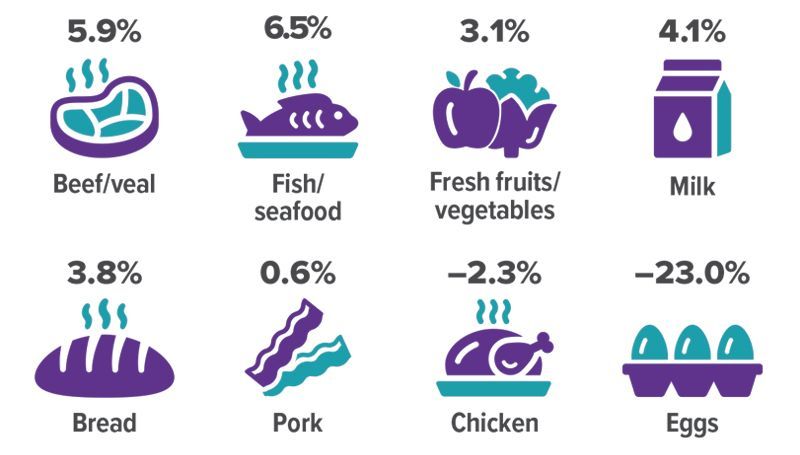
Over the 12 months that ended August 2026, prices for food at home rose a modest 2.2%, measured by the consumer price index (CPI). Unfortunately, the prices of some types of food have risen much more than others.1
Food prices are prone to volatility, in part because the crops grown to feed people and livestock are vulnerable to pests, extreme weather, and disease. One prominent example is the price of ground beef, which spiked 7.2% over the 12 months ended August 2026, and nearly 29% over the previous three years, with little relief in sight.2 Despite record prices, consumer demand for beef remained strong in 2026, while the U.S. cattle herd shrunk to a 75-year low due to drought and soaring feed, transportation, and processing costs.3
Setting a budget for groceries can help control your spending, but unpredictable price hikes can make it difficult to stay on track. Here are a few shopping strategies that could help stretch your food budget.
1. Sign up for loyalty programs, then make stores compete for your business.
Many of the specials found in weekly ads require membership in the store's club program. So even if it feels like overkill, it may be worthwhile to download membership apps, check for the most valuable promotions, and access digital coupons or "personalized" deals before you make a list and decide where to shop.
If you're concerned about your data being tracked and/or sold, you may be able to turn off tracking by store apps by adjusting the privacy and security settings in your smartphone.
2. Stock up when the price is right.
Grocery stores often rotate advertised specials for beef, chicken, and pork, so you may want to plan meals around sale-priced cuts and buy extra to freeze for later. In fact, freezing can be used to extend the shelf life of many other foods (such as bread or fruit) that might otherwise go bad before they can be eaten.
Buy extra nonperishable foods, such as rice, pasta, dried beans, canned goods, and frozen fruits and vegetables when they are on sale. You might also save money if you buy essentials in bulk at a membership store that requires an annual fee, but only if you can resist the temptation to overspend on unnecessary items and excess food that ends up going to waste.
12-month change in CPI prices, August 2026
3. Choose more affordable private-label products.
Without the high costs of research and development, marketing, and advertising associated with name brands, store brands can offer savings for consumers and higher profit margins for retailers. For this reason, most large grocery chains sell at least two levels of store brands — a basic value brand and a premium line — and some also have distinctive "organic" or "natural" product lines. A few grocery retailers stock their shelves almost entirely with their own private labels.
One study found that consumers can save 25% to 30% on their grocery bills by purchasing private-label products instead of name brands.4 Another bonus for shoppers: More competition from private labels puts pressure on national brands to keep their regular prices low and/or to run sales promotions.
As of March 2026, private-label products accounted for about 24% of food and beverage sales in the United States.5 Most consumers are willing to make some sacrifices to save money, but now there seems to be a more positive perception of the value and quality offered by private labels than there used to be in the past. In one 2026 survey, about 85% of consumers said the quality is generally as good as or better than the national brands.6
(1) & (2) U.S. Bureau of Labor Statistics, 2026
(3) Chicago Tribune, July 10, 2026
(4) & (5) Consumer Reports, 2026
(6) McKinsey, 2026
All Securities Through Money Concepts Capital Corp., Member FINRA / SIPC
11440 North Jog Road, Palm Beach Gardens, FL 33418 Phone: 561.472.2000
Copyright 2010 Money Concepts International Inc.
Investments are not FDIC or NCUA Insured
May Lose Value - No Bank or Credit Union Guarantee
This communication is strictly intended for individuals residing in the state(s) of MI. No offers may be made or accepted from any resident outside the specific states referenced.
Prepared by Broadridge Advisor Solutions Copyright 2020.